Steinsdalsfossen Waterfall
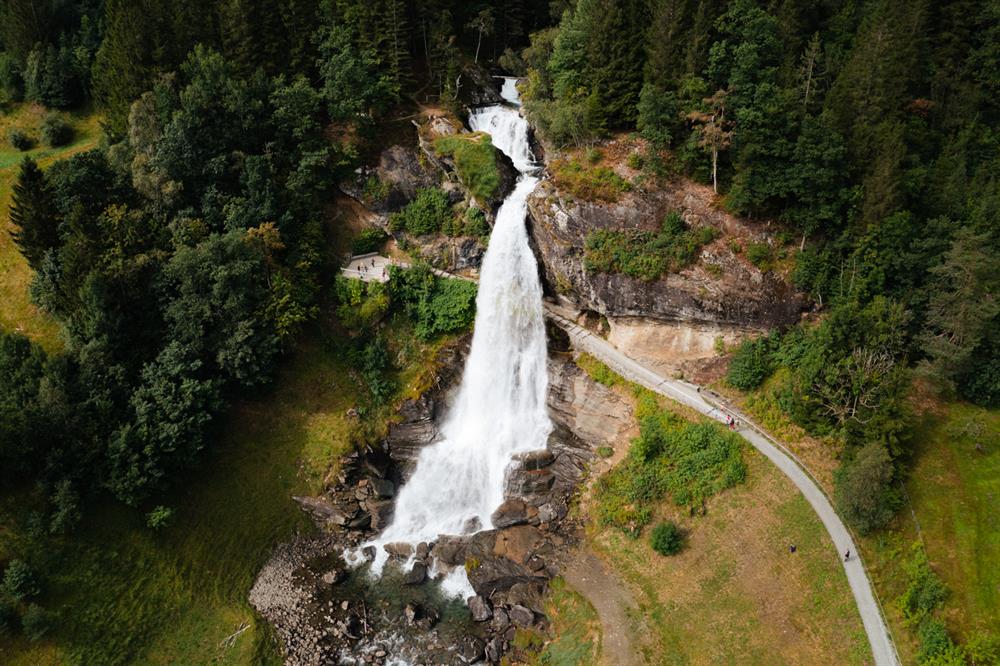
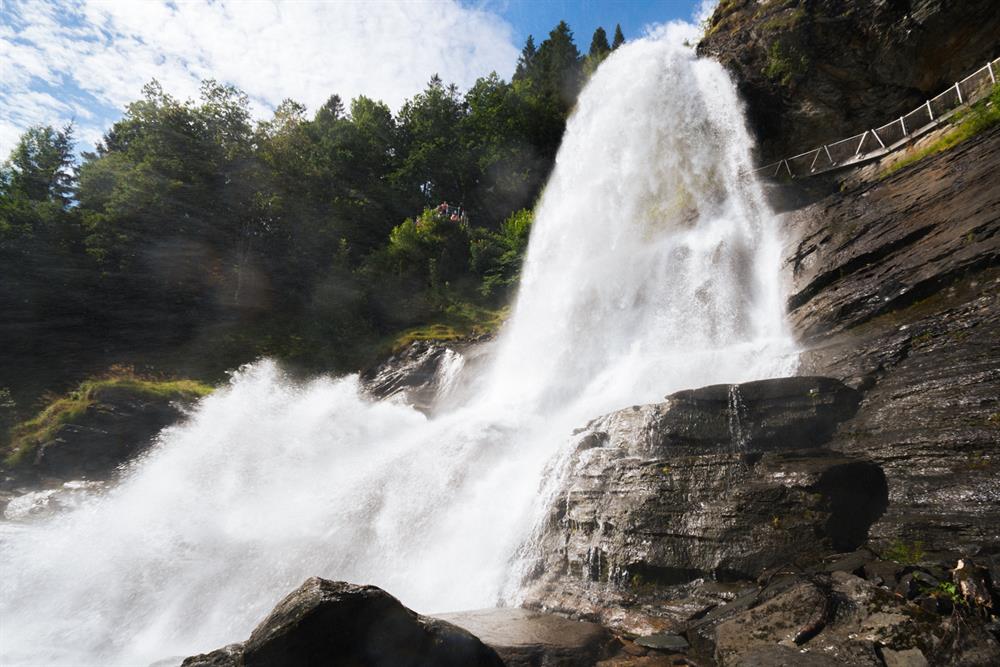
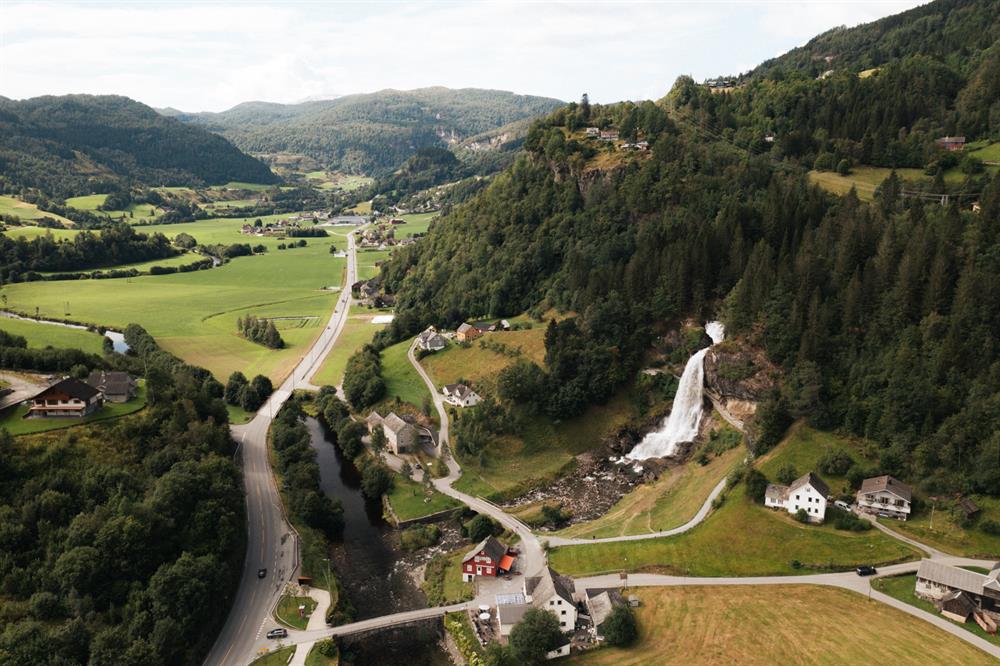
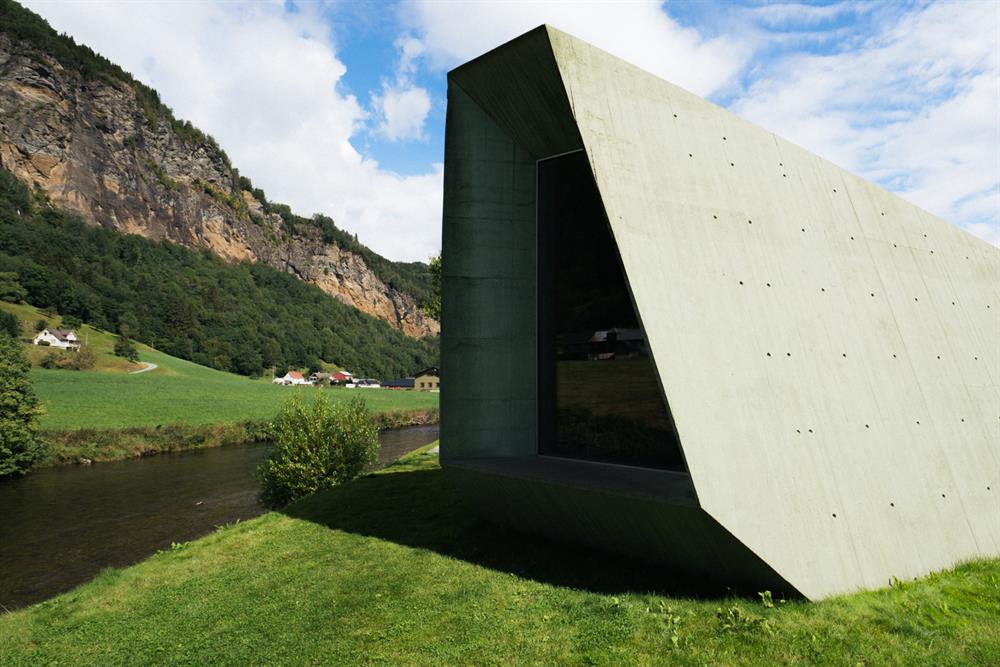
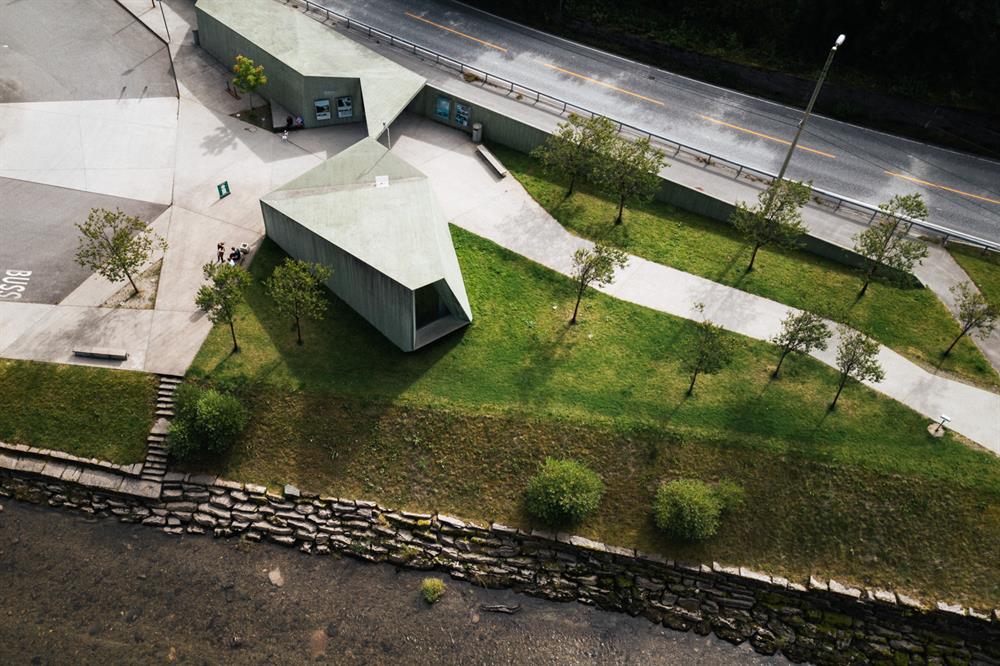
Walk safe and dry behind one of Norway's most popular waterfalls. Steinsdalsfossen near Norheimsund, is easily accessible right next to the road.

Contact information
About
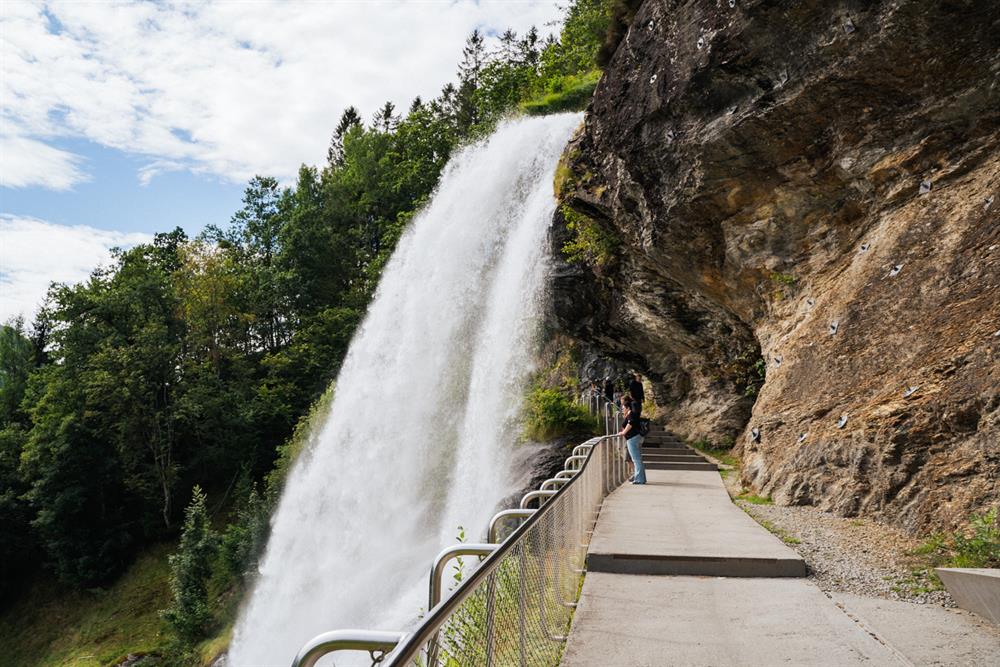
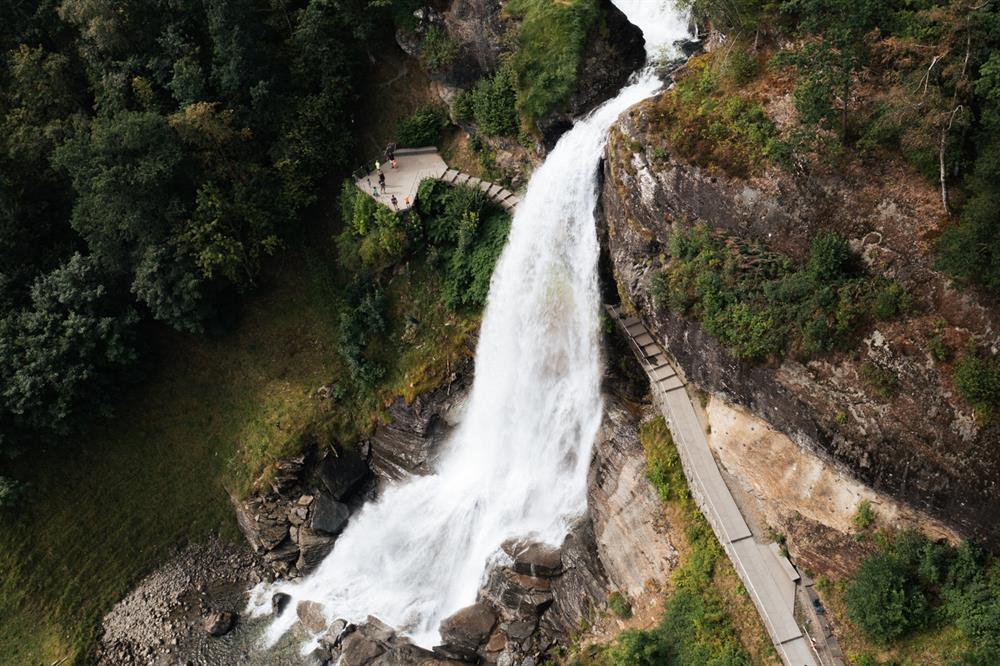
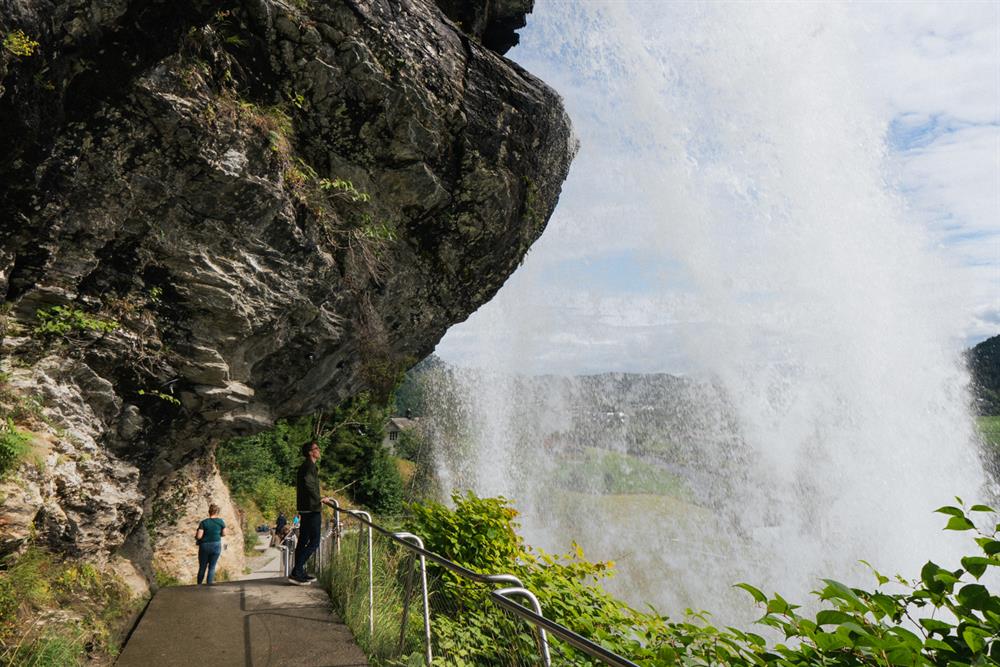
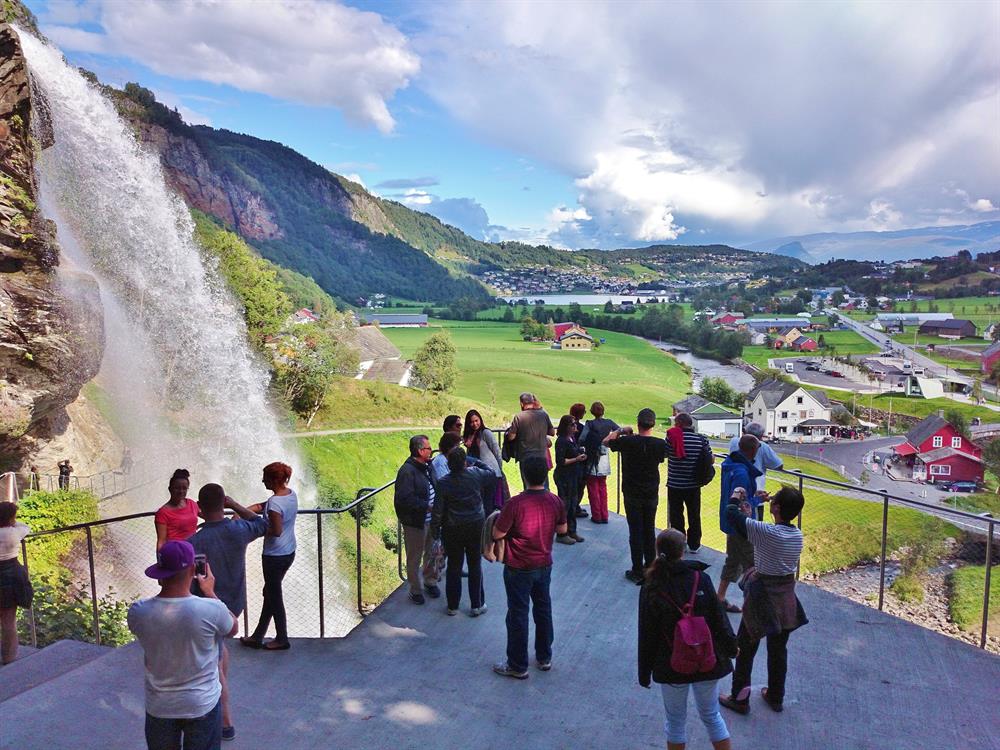
Steinsdalsfossen is of the spectacular sort as you can walk behind the waterfall on the path leading up from the car park without getting wet. Following the riverbank, the path goes behind the waterfall and out to the vantage point on the other side. From here, you can admire Steinsdalsfossen, a beautiful view of Norheimsund and over the entire Steinsdalen valley.
With its 50-meter drop, the waterfall has become a popular attraction and subject to many photos in recent years and is worth a visit. With the tourist office and a café close by, Steinsdalsfossen is assessable to everyone, whether you're in a wheelchair, use a cane or bring a stroller. Admire the waterfall and the forces of nature from the patio in the front, from the path behind it or the café by the car park.
With good parking, the tourist information close by, and as a highlight along the Norwegian Scenic Route, Steinsdalsfossen is a natural pitstop along the way.
FAQ
Yes — walking dry-shod behind the falling water is exactly what makes Steinsdalsfossen one of Norway’s most visited waterfalls. A prepared path leads up from the car park, follows the river, and continues onto a wide rock ledge directly behind the curtain of water, then out to a viewpoint on the far side overlooking the Steinsdalen valley and the village of Norheimsund. You stay dry under the ledge, though on days with heavy flow or wind — especially during the May–June snowmelt — you may catch some spray, so a light rain jacket is handy if you want to linger and take photos.
Steinsdalsfossen lies about 75 km east of Bergen, a drive of roughly 1 hour 15 minutes. Follow the E16 towards Trengereid, then Road 7 (Rv7) over the Kvamskogen plateau towards Norheimsund; the waterfall is signposted right beside Rv7, about 2 km before Norheimsund. Without a car, Skyss buses (routes 925 and 930) run from Bergen bus station to a stop called Steinsdalsfossen in around 1 hour 25 minutes, roughly every hour to ninety minutes.
Yes. Sitting right on the main road just over an hour from Bergen, Steinsdalsfossen is an easy half- or full-day trip, and most visitors combine it with more of Hardanger. Popular pairings include a stop in Norheimsund and its Hardanger Maritime Centre, where wooden boats are restored by hand; a fjord cruise or RIB safari on the Hardangerfjord; and the drive along the Hardanger National Scenic Route. Waterfall fans can add more from our overview of waterfalls in Hardanger, and the events calendar for Kvam shows what’s on while you’re in the area. See all things to do in Kvam to build your day.
Steinsdalsfossen is a short, easy stop rather than a destination in itself. It is only a two-minute walk from the car park to the falls, and you can see the highlight in about ten minutes. To walk the full loop behind the water, up to the viewpoint and along the riverbank, allow 30 to 45 minutes. With a coffee or a wander into Norheimsund it easily becomes an hour.
Yes, both the waterfall and the parking are free. The car park lies right beside Road 7 with plenty of room for cars, campervans and caravans, making it an easy stop on a self-drive tour. The parking is meant for visitors stopping to see the waterfall, not for overnight stays. Note that emptying campervan or caravan toilets is not permitted here.
Yes. Right by the falls is the Kvam Tourist Information point, where staff help you plan your Hardanger trip with maps, brochures and local tips. It also sells regional food and drink from Hardanger — jam, juice and honey — plus fresh baked goods each day, from baguettes and waffles to muffins and traditional Norwegian buns, with outdoor seating to enjoy them. The point is open through the summer season, roughly June to late September — see current opening hours. For a wider range of local produce, the Gardsmatbutikken farm shop in Øystese has more.
The waterfall is worth seeing year-round, but its power changes with the seasons. It is biggest and most dramatic in May and June, when meltwater from Lake Myklavatnet high in the mountains surges through. Summer and early autumn bring a gentler flow, pleasant weather and golden valley colours in September and October. For full volume, aim for late May.
Partly. The area around the base of the falls — the lawn, the front viewpoint and the car park — is reasonably accessible for wheelchairs and prams. The path leading all the way behind the water is steeper and includes steps, so the full loop is not fully wheelchair accessible. Families with young children appreciate the short distances and low traffic.
Steinsdalsfossen is younger than most visitors expect. It formed in 1699, when flooding — probably triggered by heavy snow or a landslide — blocked the old channel of the river Fosselva and sent the water over the cliff where it falls today. The nearby Øvsthus farm was badly damaged, which is why the waterfall is also called Øvsthusfossen. Germany’s Emperor Wilhelm II was a devoted visitor, returning almost every summer from 1889 until the outbreak of the First World War in 1914.
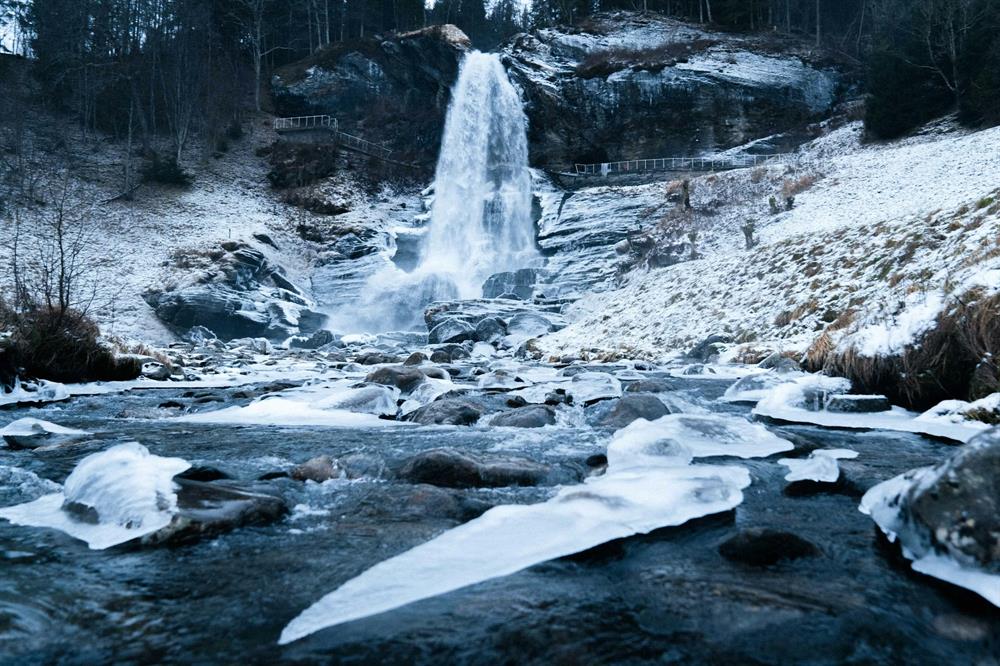
The waterfall itself can be visited all year and looks striking when its edges freeze. But part of the site closes in winter: the toilets are open early May to late October, and the tourist information and kiosk shut outside summer. Expect fewer facilities and a path behind the falls that can be slippery — wear shoes with a good grip.
